Concrete Sealing Newcastle
Concrete Sealing & Resealing
Does my concrete need resurfacing or just resealing?
Plenty of concrete that looks past it has simply lost its sealer. Newcastle's sun, salt air and rain wear sealers back steadily, and once the coating goes chalky or patchy the concrete underneath looks far worse than it is.
That's a smaller, cheaper job than resurfacing — so it's worth establishing which one you actually need before spending money on the bigger option.
The difference
Resealing vs full resurfacing
Resealing
The existing surface stays exactly as it is. It's cleaned, prepared and a new sealer is applied. Colour deepens, the finish evens out and the surface is protected again.
Consider it when
- The sealer looks dull, chalky, patchy or worn
- The concrete's texture and pattern are still fine
- You're happy with the existing colour and finish
- Staining is mostly sitting in an old coating
Full resurfacing
A new surface is applied over prepared concrete, changing colour, texture and finish. More preparation, more work, a bigger change.
Consider it when
- The surface texture is worn, rough or pitted
- You want a different colour, pattern or texture
- The area is too smooth or slippery for how it's used
- An old coating is failing and has to come off
Where it applies
Outdoor surfaces that lose their sealer first
Weather and UV exposure do most of the damage, so the surfaces that fade first are rarely a surprise.
Driveways
Full sun, vehicle traffic and hot tyres — usually the first surface to look tired.
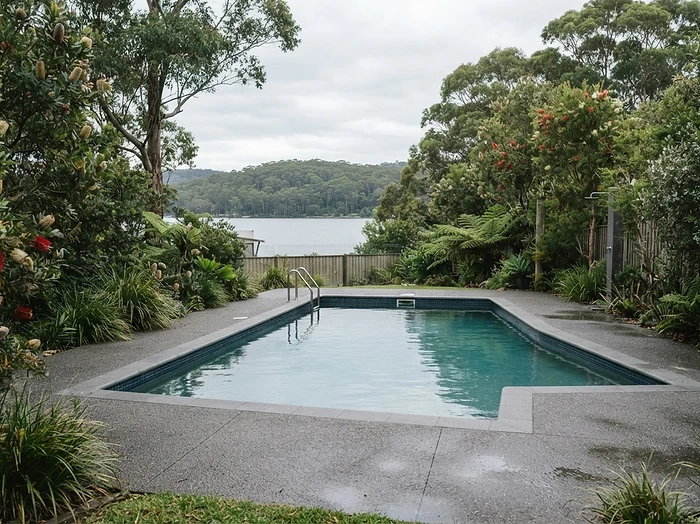
Pool surrounds
Sun, water, chemicals and bare feet. Slip resistance matters more than gloss here.
Patios & courtyards
Often partly shaded, so wear can be uneven across the same slab.
Paths & entries
Concentrated foot traffic wears sealer through in narrow tracks.
Maintenance
Keeping a sealed surface looking right
In general terms: keep grit and leaf litter off the surface, deal with oil and organic staining reasonably promptly, avoid harsh chemicals and heavy high-pressure blasting on the finish, and keep an eye on how the sealer is wearing in the sunniest, busiest areas.
These are general principles. Product-specific instructions for the sealer used on your surface always take precedence.
If the concrete underneath has bigger issues, repairs and preparation come before any coating decision.
Questions
Sealing and resealing questions
Not sure which one you need?
Send a few details and photos of your concrete. We'll tell you what looks restorable, what needs repair and when replacement genuinely makes more sense.
Call Now